Introduction
Building a successful online store requires more than an attractive design. Businesses need a platform that can support growth, deliver exceptional customer experiences, and adapt to changing market demands. Magento, now known as Adobe Commerce, has established itself as one of the most powerful eCommerce platforms for businesses seeking flexibility, scalability, and advanced customization. It is widely adopted by mid-sized and enterprise businesses because of its ability to handle complex catalogs, multi-store environments, and personalized shopping experiences.
In this guide, you'll learn about Magento development services, key benefits, current trends, expert tips, and best practices to help you make informed decisions for your eCommerce business.
What is Magento eCommerce Development?
Magento eCommerce development is the process of creating, customizing, optimizing, and maintaining online stores using Magento Open Source or Adobe Commerce. It allows businesses to build highly customized storefronts, integrate third-party applications, manage large inventories, and deliver seamless customer experiences.
Unlike many out-of-the-box eCommerce platforms, Magento provides extensive control over functionality, user experience, and business operations, making it an ideal choice for growing and enterprise-level businesses.
Why Choose Magento for eCommerce Development?
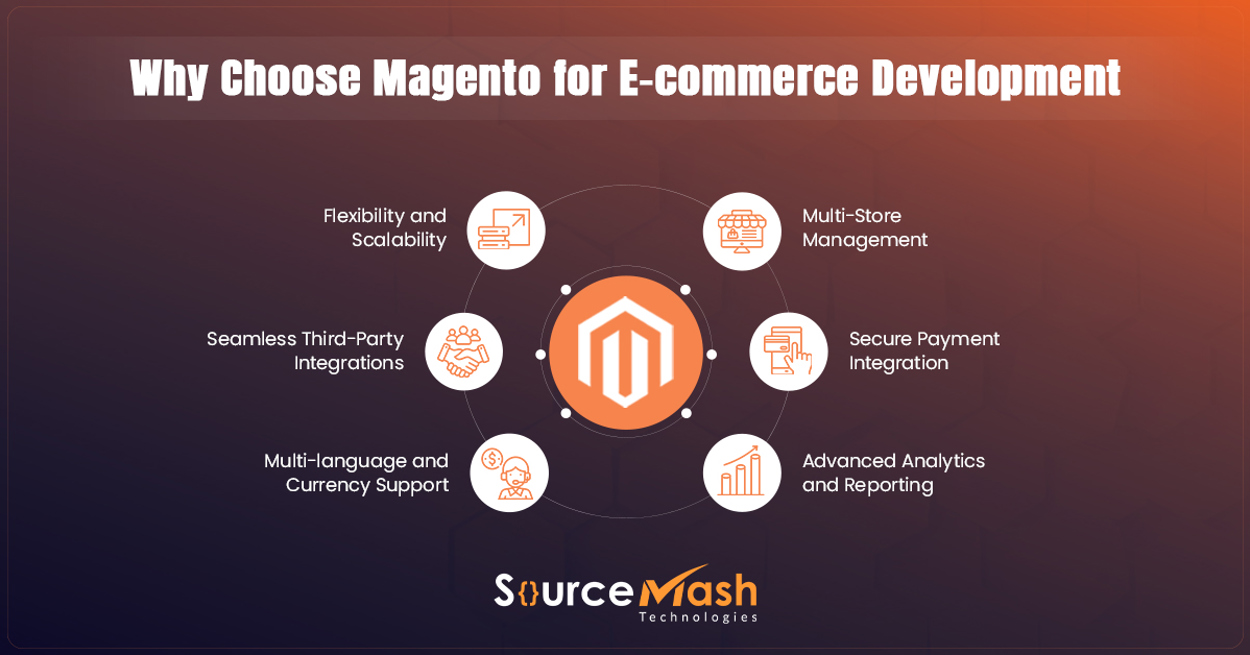
1. Scalability:- Magento can support thousands of products, multiple storefronts, and increase customer traffic without affecting performance, making it suitable for long-term business growth.
2. Advanced Customization:- Businesses can customize design, checkout processes, product pages, and backend functionality to meet specific requirements.
3. SEO-Friendly Platform:- Magento includes built-in SEO features such as custom URLs, XML sitemaps, metadata management, and canonical tags to help improve search engine rankings.
4. Multi-Store Management:- Manage multiple websites, languages, currencies, and customer groups from a single administration panel.
5. Enterprise-Grade Security:- Magento regularly releases security updates and supports advanced access controls, helping businesses protect customer and transactional data.
Magento Development Services
Custom Magento Store Development
Custom Magento development focuses on building an online store that aligns with your business objectives, target audience, and branding. From store architecture and design to functionality and user experience, every element is tailored to support seamless shopping experiences and long-term growth.
Magento Migration Services
Magento migration services help businesses move from platforms such as Shopify, WooCommerce, BigCommerce, or older Magento versions without disrupting operations. The process includes transferring products, customer data, orders, and other critical information while preserving website performance and SEO value.
Theme Customization
Theme customization involves designing and modifying Magento themes to create a visually appealing and responsive store. A customized theme not only enhances brand identity but also improves navigation, usability, and customer engagement across desktop and mobile devices.
Extension Development
Every business has unique requirements that may not be available through default Magento features. Custom extension development adds specific functionalities, streamlines business processes, and improves store performance while ensuring compatibility with the Magento ecosystem.
Third-Party Integrations
Magento can be integrated with various third-party solutions, including payment gateways, CRM platforms, ERP systems, shipping providers, and marketing tools. These integrations help automate operations, improve data management, and create a more efficient workflow.
Support and Maintenance
Regular support and maintenance ensure that your Magento store remains secure, updated, and optimized. This includes software updates, security patch installation, performance monitoring, bug fixes, and technical assistance to maintain a smooth shopping experience for customers.
Magento Development Process
A successful Magento development project follows a systematic approach to ensure the store meets business requirements and delivers a seamless user experience.
1. Requirement Analysis
The process begins with understanding business goals, target audience, store functionality, and technical requirements. This helps define the project scope and development strategy.
2. Store Planning and Design
Based on the requirements, developers and designers create the store structure, user journey, and responsive design to ensure easy navigation and a smooth shopping experience.
3. Development
The Magento store is built by implementing custom features, configuring core functionalities, and integrating third-party tools such as payment gateways, CRM, and shipping solutions.
4. Testing
Before launch, the store is thoroughly tested to identify and resolve issues related to functionality, security, performance, mobile responsiveness, and user experience.
5. Launch
Once testing is complete, the store is deployed to the live environment, ensuring all systems function properly and customers can shop without interruptions.
6. Ongoing Maintenance
Regular updates, security monitoring, bug fixes, and performance optimization help keep the Magento store secure, efficient, and aligned with evolving business needs.
Why Hire Magento Development Experts?
Magento is a powerful platform, but its advanced architecture requires specialized knowledge. Working with experienced Magento developers helps businesses:
- Reduce development errors
- Improve website performance
- Ensure secure implementation
- Build scalable solutions
- Achieve faster project delivery
- Maintain compliance with industry best practices
Professional developers also help businesses leverage Magento's full capabilities while avoiding common technical issues.
Latest Magento Development Trends
1. Headless Commerce
Headless commerce separates the frontend from the backend, allowing businesses to create faster and more personalized shopping experiences across multiple channels.
2. AI-Powered Personalization
Adobe Commerce uses artificial intelligence to provide personalized recommendations, customer segmentation, and intelligent merchandising, helping improve engagement and conversions.
3. Progressive Web Apps (PWAs)
PWAs deliver app-like experiences through web browsers, improving mobile performance, speed, and user engagement.
4. Smart Search Capabilities
AI-powered search tools help customers find products more quickly by understanding search intent and behavior patterns.
5. Cloud-Based Commerce
Cloud infrastructure offers better scalability, reliability, and operational efficiency for modern eCommerce businesses.
Expert Magento Development Tips
✓ Focus on Performance
Use caching tools, image optimization, and content delivery networks (CDNs) to maintain fast loading speeds.
✓ Choose Extensions Wisely
Install only trusted and necessary extensions to avoid performance and security issues.
✓ Prioritize Mobile Experience
A mobile-friendly store is essential for improving user engagement and conversions.
✓ Follow Coding Standards
Adhering to Magento best practices ensures maintainability, security, and smoother upgrades.
✓ Keep Magento Updated
Regular updates help protect against vulnerabilities and improve store performance.
Magento SEO Best Practices
Magento provides a strong foundation for SEO, but optimization is still necessary.
Key practices include:
- Creating SEO-friendly URLs
- Optimizing meta titles and descriptions
- Using XML sitemaps
- Implementing schema markup
- Improving page speed
- Using canonical tags
- Optimizing product descriptions and images
These practices can help improve search rankings and drive more organic traffic.
Magento vs Shopify
| Feature | Magento | Shopify |
|---|---|---|
| Customization | Extensive | Limited |
| Scalability | Excellent | Good |
| SEO Control | Advanced | Moderate |
| Multi-Store Support | Built-In | Limited |
| Enterprise Features | Strong | Moderate |
Magento is often the preferred choice for businesses that require complex functionality, greater flexibility, and long-term scalability.
Magento Development Cost
Magento development costs vary depending on project size and complexity.
Small Business Store
Estimated Cost: $5,000 – $15,000
Mid-Sized Business Store
Estimated Cost: $15,000 – $50,000
Enterprise Magento Store
Estimated Cost: $50,000 – $250,000+
Factors affecting cost include:
- Custom development requirements
- Design complexity
- Third-party integrations
- Number of products
- Adobe Commerce licensing
- Maintenance and support needs
Frequently Asked Questions
Is Magento suitable for small businesses?
Yes. Magento Open Source provides flexibility and scalability, making it suitable for startups and growing businesses.
Is Magento SEO-friendly?
Yes. Magento offers advanced SEO capabilities, including customizable URLs, XML sitemaps, canonical tags, and metadata optimization.
What is Headless Magento?
Headless Magento separates the frontend from the backend, allowing businesses to create faster and more engaging digital experiences.
How long does Magento development take?
Project timelines depend on complexity. Basic stores may take a few weeks, while enterprise projects can require several months.
Why choose Magento over other platforms?
Magento offers superior customization, scalability, multi-store functionality, and enterprise-level features compared to many traditional eCommerce platforms.
Conclusion
Magento remains one of the most powerful eCommerce platforms available today. Its flexibility, scalability, SEO capabilities, and advanced customization options make it an excellent choice for businesses looking to build future-ready online stores. With innovations such as headless commerce, AI-powered personalization, and Progressive Web Apps, Magento continues to evolve alongside changing customer expectations.
Whether you're launching a new eCommerce website or upgrading an existing one, investing in professional Magento development services can help you create a secure, high-performing, and growth-focused online store that delivers long-term business value.