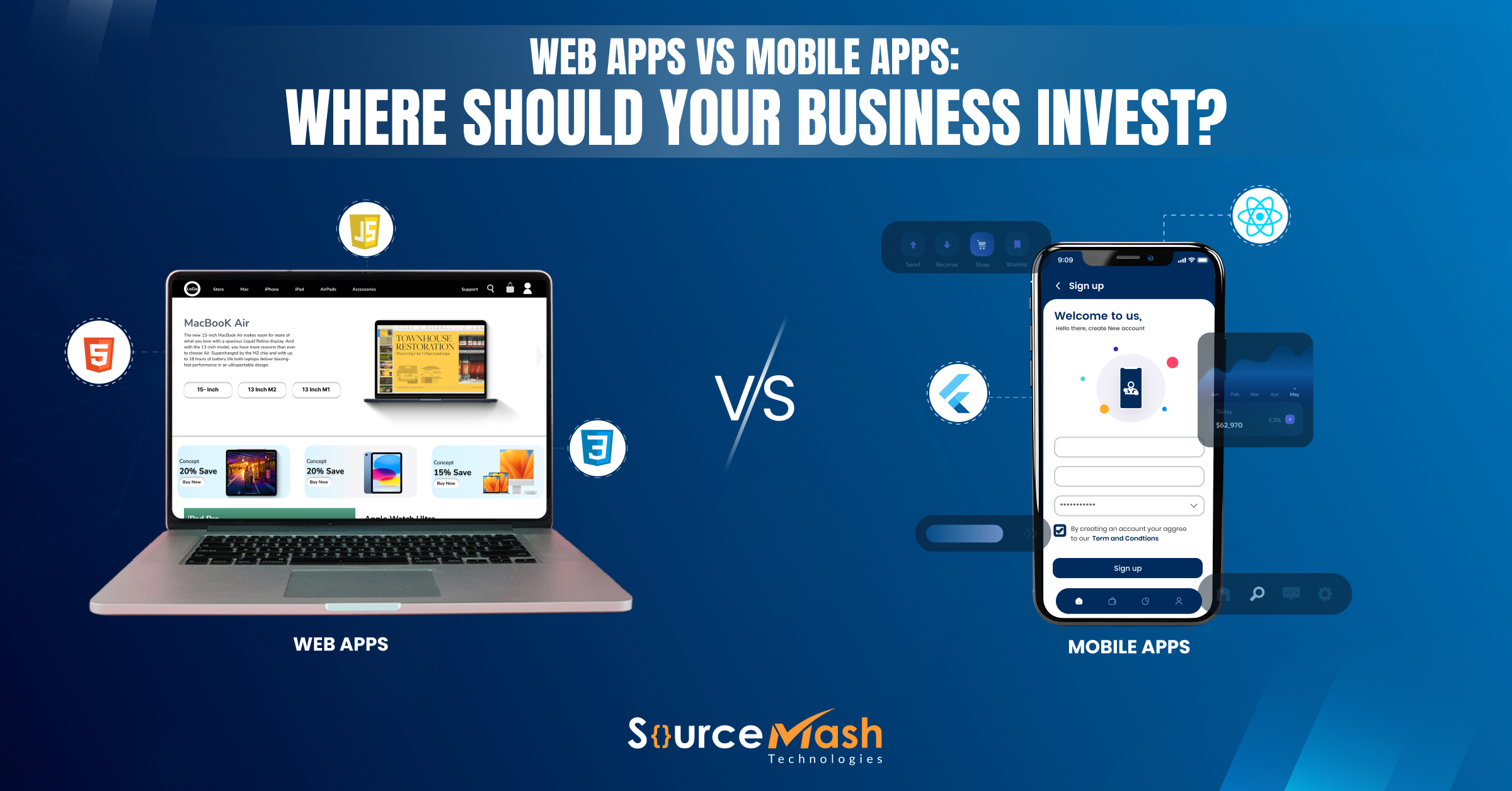
In a world where customers expect seamless digital experiences, choosing between a web app and a mobile app can significantly impact your business growth, customer engagement, and return on investment. While both solutions help organizations reach and serve users digitally, they offer different benefits, costs, and capabilities.
The short answer? If your priority is affordability, broad accessibility, and search engine visibility, a web app is often the smarter starting point. If your goal is maximizing engagement, retention, and personalized experiences, a mobile app may deliver greater long-term value. For many businesses, a Progressive Web App (PWA) can provide the best of both worlds.
This guide breaks down everything you need to know to make the right investment decision.
Understanding the Difference Between Web Apps and Mobile Apps
What Is a Web App?
A web app is an interactive software application that runs through a web browser. Users can access it on desktops, tablets, or smartphones using a web address, without downloading anything.
Popular examples include:
- Google Docs
- Trello
- Canva
- Salesforce
- HubSpot
Web apps are built using web technologies and are accessible across multiple devices from a single platform.
Key Characteristics of Web Apps
- No installation required
- Accessible through browsers
- Responsive across devices
- Easier updates and maintenance
- Search engine visibility
- Lower development costs
What Is a Mobile App?
A mobile app is software specifically designed for smartphones and tablets. Users install these apps through platforms such as the Apple App Store or Google Play Store.
Examples include:
- Uber
- Spotify
- PayPal
Mobile apps are optimized for specific operating systems and can directly interact with device hardware.
Key Characteristics of Mobile Apps
- Download and installation required
- Optimized for mobile devices
- Faster performance
- Offline functionality
- Advanced device integration
- Push notifications and personalization
Web Apps vs Mobile Apps: Quick Comparison
| Feature | Web App | Mobile App |
|---|---|---|
| Installation Required | No | Yes |
| Access | Browser-Based | Device-Based |
| Development Cost | Lower | Higher |
| Time to Market | Faster | Slower |
| SEO Visibility | Excellent | Limited |
| Offline Access | Limited | Strong |
| Device Integration | Moderate | Full |
| Performance | Good | Excellent |
| User Engagement | Moderate | High |
| Push Notifications | Limited | Advanced |
| Maintenance | Easier | More Complex |
Benefits of Investing in a Web App
1. Lower Development Costs
A web app usually requires a single codebase that works across multiple operating systems and devices. Businesses investing in web application development services can further reduce development, testing, and maintenance costs while ensuring scalability.
For startups and small businesses, this can provide faster market entry without a major initial investment.
2. Faster Time to Market
Web apps can often be developed and launched more quickly than separate native Android and iOS applications.
Benefits include:
- Faster MVP launches
- Quicker customer feedback
- Easier iteration and updates
- Reduced development cycles
3. Better Reach and Accessibility
Users can access a web app through any modern browser.
There is no need to:
- Install an app
- Register through an app store
- Use device storage
- Download updates manually
This removes barriers and helps increase adoption.
4. SEO and Organic Traffic Benefits
One of the biggest advantages of web apps is visibility in search engines.
Businesses can attract customers through:
- Organic search
- Content marketing
- Local SEO
- Product pages
- Educational resources
This makes web apps particularly valuable for lead generation and customer acquisition.
5. Easier Maintenance
Updates can be deployed instantly from a central server.
Users automatically access the latest version without downloading updates, helping maintain consistency and security.
Benefits of Investing in a Mobile App
1. Superior User Experience
Mobile apps are designed specifically for smartphone users.
Advantages include:
- Faster navigation
- Optimized interfaces
- Smooth animations
- Better responsiveness
This often leads to improved customer satisfaction.
2. Higher User Engagement
Mobile apps create direct communication channels with customers through:
- Push notifications
- In-app messaging
- Loyalty programs
- Personalized recommendations
These features encourage frequent interactions and repeat purchases.
3. Better Performance
Since mobile apps operate directly on device hardware, they generally provide:
- Faster loading times
- Improved responsiveness
- Better handling of complex features
- Enhanced user experiences
This is particularly important for high-performance applications.
4. Full Access to Device Features
Mobile apps can use device capabilities such as:
- GPS
- Camera
- Bluetooth
- NFC
- Biometrics
- Contacts
- Motion sensors
Businesses that depend on these features often benefit significantly from native applications.
5. Stronger Customer Retention
A permanent app icon on a user's device increases brand visibility.
This can contribute to:
- More frequent visits
- Greater brand awareness
- Increased loyalty
- Higher customer lifetime value
Performance Comparison: Which Is Faster?
Performance is often a deciding factor.
| Performance Factor | Web App | Mobile App |
|---|---|---|
| Loading Speed | Good | Excellent |
| Offline Functionality | Limited | Excellent |
| Device Access | Moderate | Full |
| Complex Processing | Moderate | Excellent |
| Animation Quality | Good | Excellent |
For businesses that rely on intensive processing, real-time functionality, or advanced user experiences, mobile apps usually provide better performance.
Security: Web Apps vs Mobile Apps
Security is essential regardless of platform.
Web App Security Advantages
- Centralized updates
- Faster patch deployment
- Easier version control
- Reduced outdated software risks
Challenges
- Browser-based vulnerabilities
- Internet-dependent security threats
Mobile App Security Advantages
- Biometric authentication
- Device-level encryption
- Secure login methods
- Enhanced protection for sensitive data
Challenges
- Multiple platform updates
- App store compliance requirements
- User delays in installing updates
When developed correctly, both web and mobile apps can achieve strong security standards.
Which Option Delivers Better ROI?
Businesses should evaluate return on investment rather than focusing solely on development costs.
Web Apps Typically Deliver Better ROI When
- Budget is limited
- SEO drives customer acquisition
- Broad market reach is important
- Customer interactions are occasional
- Fast launch is required
Common Examples
- SaaS platforms
- Educational portals
- Business dashboards
- Booking systems
- B2B solutions
Mobile Apps Typically Deliver Better ROI When
- Daily customer engagement matters
- Repeat purchases drive revenue
- Loyalty programs fuel retention
- Personalized experiences increase conversions
- Push notifications support marketing strategies
Common Examples
- Banking applications
- Food delivery platforms
- Streaming services
- Fitness apps
- Ride-hailing services
Web App vs Mobile App for Startups
For most startups, launching a web app first is often a more practical strategy.
Benefits include:
- Lower risk
- Reduced upfront investment
- Faster validation of ideas
- Easier collection of customer feedback
Once market demand has been proven and customer behavior is understood, businesses can invest in dedicated mobile applications.
This phased approach helps prevent overspending before a product-market fit is established.
What Are Progressive Web Apps (PWAs)?
Progressive Web Apps (PWAs) combine many benefits of web and mobile apps.
A PWA can:
- Run through a browser
- Be installed on a device
- Support push notifications
- Offer offline functionality
- Load quickly
- Work across platforms
Why Businesses Choose PWAs
PWAs help organizations provide app-like experiences while reducing development and maintenance costs.
They are particularly suitable for:
- E-commerce stores
- Online marketplaces
- News platforms
- Service providers
- Content-driven businesses
For many organizations, PWAs represent a balanced middle-ground solution.
Should Your Business Build Both?
The decision is not always either-or.
Many successful companies follow this progression:
Phase 1: Launch a Web App
- Gain visibility
- Attract customers through search
- Validate demand
- Collect usage data
Phase 2: Build a Mobile App
- Improve engagement
- Increase retention
- Expand functionality
- Strengthen customer loyalty
This approach often delivers the highest long-term return while minimizing initial risk.
Industry-Specific Recommendations
Best Industries for Web Apps
- SaaS companies
- B2B software providers
- Educational platforms
- Real estate portals
- Booking systems
- Internal business tools
Best Industries for Mobile Apps
- FinTech
- Healthcare
- Gaming
- Fitness and wellness
- Transportation
- Food deliver
- Social networking
- Video streaming
How to Choose the Right Option?
Choose a Web App If:
✅ You need a lower-cost solution
✅ SEO is important
✅ Fast deployment is a priority
✅ Users access your platform from multiple devices
✅ Broad reach matters more than engagement
Choose a Mobile App If:
✅ Customer engagement is critical
✅ Push notifications drive revenue
✅ Offline accessibility is required
✅ Advanced device features are needed
✅ Customer retention is a major objective
Choose a Progressive Web App If:
✅ You want app-like functionality
✅ Budget efficiency matters
✅ Cross-platform access is important
✅ SEO remains a priority
✅ You want to reduce installation barriers
Frequently Asked Questions
Is a web app cheaper than a mobile app?
In most cases, yes. Web apps usually require a single codebase and simpler maintenance, making them less expensive to develop and manage.
Which is better for startups?
A web app is often the best starting point because it enables faster launches, lower costs, and easier validation of business ideas.
Can a web app work offline?
Traditional web apps have limited offline capabilities, but Progressive Web Apps can offer offline functionality.
Do I need both a web app and a mobile app?
Not necessarily. Many businesses begin with a web app and add a mobile app later when customer demand and usage data justify the investment.
Which option is better for eCommerce?
Web apps are excellent for customer acquisition through search engines, while mobile apps often perform better for customer retention and repeat purchases.
Are mobile apps more secure than web apps?
Not inherently. Security depends on implementation, maintenance, encryption, authentication methods, and development best practices.
Final Verdict
There is no universal winner between web apps and mobile apps. The best investment depends on your business goals, audience behavior, budget, and growth strategy.
If your focus is cost efficiency, accessibility, SEO, and rapid deployment, a web app is usually the smarter choice. If your focus is customer engagement, retention, personalization, and advanced functionality, a mobile app often delivers greater long-term value.
For many businesses, the most effective strategy is to start with a web app or Progressive Web App, validate market demand, and then expand into dedicated mobile applications as user engagement and revenue grow. By aligning your technology investment with your business objectives, you can maximize ROI, improve customer experiences, and build a scalable foundation for future success.