The ecommerce industry has evolved rapidly over the past decade. What started as a convenient way to shop online has become a highly connected digital ecosystem powered by technologies such as artificial intelligence (AI), cloud computing, automation, data analytics, and immersive experiences.
Consumer expectations have also changed significantly. Today's shoppers expect personalized recommendations, seamless omnichannel experiences, flexible payment options, fast delivery, and consistent interactions across every touchpoint.
The COVID-19 pandemic accelerated digital adoption, forcing businesses to modernize their operations and embrace new technologies. As competition continues to increase, digital transformation has become essential for ecommerce businesses looking to improve customer experiences, streamline operations, and achieve long-term growth.
In this article, we'll explore how digital transformation is reshaping ecommerce businesses, the technologies driving this change, its benefits and challenges, and the future of digital commerce.
What Is Digital Transformation in Ecommerce?
Digital transformation in ecommerce refers to the integration of digital technologies into business processes, customer experiences, and operational workflows to improve efficiency, scalability, and business performance.
It goes beyond simply launching an online store. Digital transformation involves rethinking how businesses operate, engage customers, manage data, optimize supply chains, and deliver value through technology.
Modern ecommerce companies leverage technologies such as:
- Artificial Intelligence (AI)
- Machine Learning (ML)
- Cloud Computing
- Data Analytics
- Automation Tools
- Customer Data Platforms (CDPs)
- Chatbots and Virtual Assistants
- Augmented Reality (AR)
- Virtual Reality (VR)
- Progressive Web Applications (PWAs)
These technologies help businesses become more agile, customer-focused, and competitive in an increasingly digital marketplace.
Why Are Ecommerce Businesses Undergoing Digital Transformation?
Several factors are pushing ecommerce businesses to accelerate their digital transformation efforts.
1. Rising Customer Expectations
Modern consumers expect convenience, speed, and personalization throughout their shopping journey. They want fast-loading websites, personalized product recommendations, easy checkout processes, flexible payment options, and quick deliveries. Businesses must continuously improve their digital capabilities to meet these expectations.
2. Increasing Market Competition
With thousands of online stores competing for attention, businesses need innovative ways to stand out. Digital transformation helps companies differentiate themselves through superior customer experiences, operational efficiency, and data-driven decision-making.
3. Growth of Direct-to-Consumer (DTC) Commerce
More brands are building direct relationships with customers through their own websites and digital platforms. This approach allows businesses to gain better insights into customer preferences, improve customer loyalty, and increase profitability.
4. Expansion of Mobile Commerce
As mobile shopping continues to grow, businesses are investing in mobile-first experiences, responsive design, and mobile applications that make purchasing easier for customers on any device.
5. Advances in Technology
The widespread availability of cloud-based platforms, AI solutions, automation tools, and advanced analytics has made digital transformation more accessible and practical for businesses of all sizes.
How Ecommerce Businesses Are Changing Through Digital Transformation?
Several factors are driving ecommerce organizations to invest heavily in digital transformation initiatives.
✓ Changing Customer Expectations
Modern consumers expect fast, convenient, and personalized shopping experiences. They want accurate product recommendations, easy checkout processes, multiple payment options, and rapid fulfillment.
Businesses must continuously innovate to meet these growing expectations.
✓ Intensifying Market Competition
The ecommerce landscape has become highly competitive. Digital transformation enables companies to differentiate themselves through innovation, better customer experiences, and operational excellence.
✓ Growth of Direct-to-Consumer (DTC) Commerce
Many brands are now selling directly to consumers through their websites and mobile applications. This approach provides greater control over customer relationships, branding, and customer data.
✓ Expansion of Mobile Commerce
Mobile devices have become a primary shopping channel. Ecommerce businesses are investing in mobile-first experiences, responsive websites, and applications designed specifically for mobile users.
✓ Increased Availability of Advanced Technologies
Cloud platforms, AI-powered tools, automation software, and advanced analytics solutions have become more accessible, enabling businesses of all sizes to adopt digital transformation strategies.
Key Technologies Driving Ecommerce Transformation
Technology serves as the foundation of modern ecommerce innovation.
1. Artificial Intelligence and Machine Learning
AI helps ecommerce businesses:
- Deliver personalized product recommendations
- Forecast product demand
- Automate customer support
- Detect fraudulent activities
- Optimize pricing strategies
- Improve customer segmentation
Machine learning continuously improves these capabilities by analyzing customer behavior and transaction data.
2. Cloud Computing
Cloud technology provides scalable infrastructure for ecommerce businesses.
Key advantages include:
- Reduced infrastructure costs
- Faster deployment of new features
- Improved system reliability
- Greater scalability
- Better collaboration across teams
- Enhanced disaster recovery capabilities
Cloud-based environments allow businesses to respond quickly to market changes without significant hardware investments.
3. Customer Data Platforms (CDPs)
Customer Data Platforms (CDPs) consolidate information from websites, mobile applications, email campaigns, social media channels, and other touchpoints into a unified customer profile.
This enables businesses to:
- Understand customer behavior more effectively
- Deliver highly personalized experiences
- Improve audience segmentation
- Create targeted marketing campaigns
4. Automation Technologies
Automation streamlines repetitive processes across ecommerce operations, including:
- Inventory management
- Order processing
- Email marketing
- Customer support
- Supply chain coordination
- Product catalog management
This improves efficiency while reducing operational costs.
How Digital Transformation Is Changing Ecommerce Businesses
Digital transformation is fundamentally reshaping how ecommerce companies operate and interact with customers.
✓ Creating Customer-Centric Experiences
Today's ecommerce organizations place customer needs at the center of decision-making.
From personalized shopping journeys to proactive support and customized marketing campaigns, businesses are focusing on improving customer satisfaction and loyalty.
✓ Making Data-Driven Decisions
Data has become one of the most valuable assets in ecommerce.
Organizations use analytics to:
- Understand customer behavior
- Monitor sales performance
- Forecast demand
- Optimize marketing campaigns
- Improve inventory planning
This enables faster and more informed decision-making.
✓ Enabling Omnichannel Commerce
Consumers engage with brands through multiple channels, including:
- Websites
- Mobile applications
- Social media platforms
- Online marketplaces
- Physical stores
Digital transformation helps businesses create a unified experience across all customer touchpoints, ensuring consistency throughout the shopping journey.
✓ Improving Supply Chain Visibility
Modern technologies provide real-time visibility into inventory levels, warehouse operations, and logistics processes.
This helps businesses reduce delays, improve forecasting accuracy, and enhance operational efficiency.
✓ Enhancing Customer Engagement
Technology enables brands to engage with customers through personalized communications, targeted promotions, loyalty programs, and real-time support experiences.
Benefits of Digital Transformation in Ecommerce
Businesses that successfully embrace digital transformation can unlock several important benefits.
✓ Enhanced Customer Experience
Modern digital tools allow businesses to deliver faster, smoother, and more personalized shopping experiences that improve customer satisfaction.
✓ Higher Conversion Rates
Personalized recommendations, optimized product pages, and streamlined checkout experiences help convert more visitors into customers.
✓ Improved Operational Efficiency
Automation reduces repetitive tasks, enhances productivity, and allows teams to focus on strategic initiatives.
✓ Better Inventory Management
Advanced analytics and forecasting tools help businesses maintain optimal inventory levels, preventing both stock shortages and excess inventory.
✓ Faster Order Fulfillment
Digital technologies improve logistics planning and warehouse operations, helping businesses deliver products more quickly and efficiently.
✓ Increased Scalability
Cloud-based infrastructure allows ecommerce companies to scale their operations without making substantial investments in physical infrastructure.
✓ Stronger Customer Retention
By providing better customer experiences and personalized interactions, businesses can build stronger relationships and improve customer loyalty.
Emerging Ecommerce Digital Transformation Trends
Several emerging trends continue to shape the future of ecommerce.
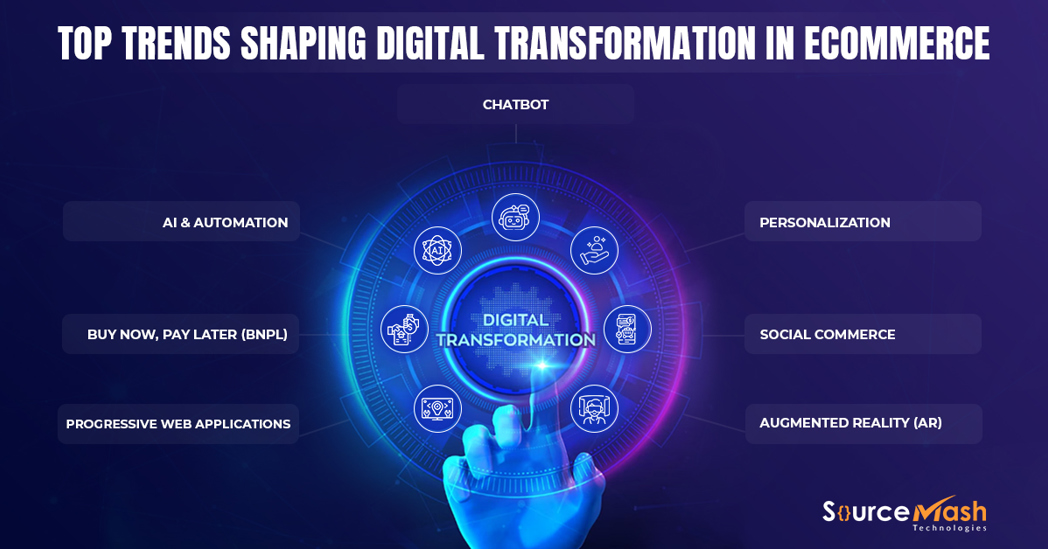
✓ Social Commerce
Social media platforms have evolved into powerful sales channels. Businesses increasingly sell products directly through Instagram, Facebook, TikTok, Pinterest, and similar platforms.
✓ Buy Now, Pay Later (BNPL)
Flexible payment options allow customers to split purchases into smaller installments, increasing affordability and purchase likelihood.
✓ Headless Commerce
Headless commerce separates frontend customer experiences from backend systems, providing greater flexibility and faster innovation.
✓ Progressive Web Applications (PWAs)
PWAs combine the benefits of websites and mobile applications, offering fast-loading experiences, offline functionality, and improved user engagement.
✓ Augmented Reality and Virtual Reality
AR and VR allow customers to visualize products before purchasing, reducing uncertainty and improving buying confidence.
✓ Voice Commerce
Voice-enabled shopping through smart assistants such as Alexa, Google Assistant, and Siri is becoming increasingly popular.
Customers can search for products, reorder purchases, and complete transactions using voice commands.
The Growing Importance of Cybersecurity in Ecommerce
As ecommerce businesses collect increasing amounts of customer data, cybersecurity has become a critical component of digital transformation.
Organizations must protect sensitive information through:
- Multi-factor authentication (MFA)
- Data encryption
- Secure payment gateways
- Fraud detection systems
- Regular security audits
- Compliance with privacy regulations
Strong cybersecurity practices help build customer trust and reduce business risks.
Sustainability and Digital Commerce
Sustainability is becoming an important focus area for ecommerce businesses.
Digital transformation supports sustainability through:
- Smart inventory management
- Supply chain optimization
- Route optimization for deliveries
- Reduced paper-based processes
- Sustainable packaging initiatives
Consumers increasingly prefer brands that demonstrate environmental responsibility, making sustainability a valuable competitive advantage.
Challenges in Ecommerce Digital Transformation
Although digital transformation offers substantial benefits, businesses often face several challenges during implementation.
1. Resistance to Change
Employees and leadership teams may struggle to adapt to new technologies and processes. Successful transformation requires strong leadership, training, and a culture of innovation.
2. Technology Integration
Integrating modern solutions with existing systems can be complex and time-consuming. Businesses must ensure compatibility and minimize disruptions during implementation.
3. Cybersecurity and Data Privacy Risks
As ecommerce businesses collect more customer data, protecting sensitive information becomes increasingly important. Organizations must invest in robust cybersecurity measures and maintain compliance with relevant privacy regulations.
4. Skills and Talent Shortages
Digital transformation often requires expertise in AI, cloud computing, analytics, cybersecurity, and automation. Finding and retaining skilled professionals can be challenging.
5. Initial Investment Costs
Implementing advanced technologies may require significant upfront investment. However, the long-term benefits often outweigh the initial costs.
How to Successfully Implement Digital Transformation in Ecommerce
Step 1: Define Clear Business Objectives
Establish measurable goals related to revenue growth, customer satisfaction, operational efficiency, and market expansion.
Step 2: Assess Existing Processes
Evaluate current systems, workflows, and customer experiences to identify gaps and opportunities for improvement.
Step 3: Develop a Customer-First Strategy
Every digital initiative should contribute to improving customer experiences and addressing customer needs.
Step 4: Invest in the Right Technologies
Select technologies that align with business goals and deliver measurable value, including AI, analytics, automation, cloud platforms, and customer engagement tools.
Step 5: Train and Support Employees
Employee adoption is critical to transformation success. Provide training and ongoing support to help teams adapt to new tools and processes.
Step 6: Continuously Monitor and Optimize
Digital transformation is an ongoing journey. Businesses should regularly analyze performance data, gather customer feedback, and refine their strategies.
The Future of Ecommerce Digital Transformation
The future of ecommerce will be driven by innovation, automation, and increasingly personalized customer experiences.
Key developments expected to shape the industry include:
- AI-powered hyper-personalization
- Greater adoption of AR and VR
- Increased supply chain automation
- Expansion of social commerce
- Growth of omnichannel retail ecosystems
- Wider use of voice commerce
- Advanced predictive analytics
- Enhanced cybersecurity frameworks
- Sustainable ecommerce practices
- Adoption of cloud-native ecommerce platforms
Businesses that embrace these innovations will be better positioned to adapt to changing consumer expectations and maintain a competitive edge.
Conclusion
Digital transformation has become a fundamental driver of ecommerce success, and businesses increasingly rely on e-commerce services to build scalable online stores, improve customer experiences, and accelerate growth. By leveraging technologies such as AI, cloud computing, automation, analytics, and omnichannel commerce, businesses can improve efficiency, enhance customer experiences, and unlock new growth opportunities.
As technology continues to evolve, ecommerce organizations that prioritize innovation, data-driven decision-making, cybersecurity, and customer-centric strategies will be best positioned to thrive in the digital economy.